Be So For Real
If you have ever let culture run on autopilot, wake it up and take the wheel. This is the part where you either show up or crash out. Companies that…

Odds are you don’t have a differentiated brand.
That is not judgement, criticism or opinion.
It is a statement of fact backed by respected outside research.
Forrester, Harvard, Deloitte, LinkedIn and every credible brand valuation firm point to the same finding.
As many as ninety percent of brands blend into what researchers call the “sea of sameness.”
Competing brands in every niche rely on the same language, the same claims, and the same logic.
Romaniuk, Sharp, and Ehrenberg’s work confirms that customers see very little meaningful difference between competitors.
You can’t differentiate if you don’t understand your customer better than anyone else in your category.
The line between knowing your customer and differentiation is short and direct.
Brands collect data, but they don’t synthesize it.
Insights sit disconnected in silos.
Teams rely on assumptions that haven’t been validated.
Research is captured via surveys; responses are shallow and no one knows if the right questions were even asked.
McKinsey found that while most executives believe innovation is essential, almost all (94%) are disappointed in their organization’s ability to connect the dots to customer needs.
This is how so many brands have drifted out of alignment with the very people they serve.
Companies end up talking about themselves instead of speaking to customers about what they need and what they are navigating right now.
We see this constantly: vague positioning, fuzzy lists dressed up as strategy, language that doesn’t even make sense inside the room let alone influence decisions outside it.
That’s the point.
In uncertain and disruptive markets, a bland brand is a risk.
That’s not a marketing issue. That is a compromised financial strategy.
So why does this matter now?
Because in unpredictable markets, relevance is what keeps you in play.
In that environment, unclear brands take the hit first because they give people no reason to act now, stay the course, pay for value, or trust that you are an ally.
Now is the time to know your customer better than anyone else.
Most organizations are not in active conversation with their base right now.
They are relying on secondhand reporting, CRM fragments, internal interpretation, news bites, and overthinking instead of acting.
In uncertainty, customer needs shift faster than internal strategy.
If you are not making the calls, asking better questions, and listening in real time, you are operating in the dark and your customers are planning ahead without your involvement.
The calls start with “How can we help,” not as a script, but to actually understand what your customers are dealing with right now, in their words, in real time.
That kind of direct understanding gives you something most companies don’t have:
certainty you can act on, and a partnership that is meaningful while everything is up for grabs.
Reaching out now is itself a differentiator because most companies will not do it; volumes of research prove that organizations retreat rather than advance in the face of adversity.
Others will wait or convince themselves they already know enough.
Make the calls. Listen. This is where differentiation starts.
Inside those conversations is an incredible advantage.
The call is more than a gesture.
Done well, it becomes a working session.
Problems get clarified in plain terms.
Needs get named more precisely.
Gaps become visible.
The way forward comes into focus for both of you.
Trust builds while the situation is still in flux.
This is how differentiation is discovered.
Not in a workshop or polished in a session.
It is extracted one real conversation at a time between people wrestling real tensions.
Then it gets translated into sharper positioning, more relevant offers, stronger decisions, more resilient margins, and better relationships with your customers.
Kantar’s research shows that meaningful differentiation cuts risk in half and makes brands more than twice as likely to grow market share.
It becomes even more protective in times of trouble when customers understand the value of paying for what they believe is genuinely better in a market of sameness.es even more protective. Customers will pay for what they believe is genuinely better.
The call to Raise Better Hell has nothing to do with making noise and everything to do with disrupting your market in the smartest, most effective manner, one call at a time.
Raise better hell by getting closer to the customer than your competitors are willing to get.
Raise better hell by learning quicker, responding faster, and building relevance while others wait in the dark.
Raising better hell chooses agency and urgency over complacency, contact over avoidance, relevance over routine, and truth over assumption.
Raise better hell by saying what needs to be said, delivering what meets the need, and positioning yourself as the smartest and safest bet in the business.
That’s the defense.
It is about being the partner that listens, interprets, and responds while the conditions are shifting.
It is about refusing to let your brand become another safe, forgettable placeholder in a crowded market.
Deep customer understanding leads to stabilizing, money making, people centric differentiation.
Powerful differentiation is always the answer. Now it’s non-negotiable.
This is the moment to unearth the brand you always wanted to lead.
The brand that levels up under pressure, breaks away from the pack, and responds with courage when the easy move is to wait in the wings.
It is the discipline to stay in the conversation long enough to crack the code.
Raise better hell, and you come out the other side with greater stability, more relevance, and a story you earned the hard won way.
Raise better hell, and you plant a flag that says you didn’t wait for the storm to pass or your fate to be determined.
You leaned in against the odds.
Raise better hell, and you give your organization the one thing volatility cannot take from you:
a future you shaped on purpose.
It is about stepping in and up because you aren’t hoping to survive the moment.
You are here to run it.
Differentiated brands are built on substance. The research below backs every point you just read with hard evidence from the most credible sources in the field.
Alphabetized Citations (A–Z)
1. Accenture (2022). “Life Reimagined.” Shows that customer expectations shifted dramatically post‑2020, and companies that failed to adapt lost loyalty at significantly higher rates. Supports: volatility exposure; shifting needs; urgency of real‑time insight.
2. American Psychological Association (2020). “Stress and Decision Making Under Pressure.” Demonstrates that cognitive load narrows attention, reduces curiosity, and increases reliance on assumptions. Supports: psychological mechanisms behind risk; why companies stop listening.
3. Deloitte (2020). “Human Experience in Times of Uncertainty.” Shows that most companies rely on outdated or surface‑level customer understanding, especially during disruption. Supports: superficial research; outdated assumptions; misalignment.
4. Edelman Trust Barometer (2021–2024). Finds that companies that fail to communicate proactively during crises experience accelerated trust erosion. Supports: brands not calling customers; crisis response failures; risk amplification.
5. Forrester (2023). “The State of Customer Obsession.” Finds that only 6 percent of companies qualify as customer obsessed, meaning they use insight to drive differentiation and decisions. Supports: companies don’t know their customers; insight gaps.
6. Gartner (2022). “Customer Data Survey.” Reports that 58 percent of organizations admit their customer data is incomplete, siloed, or poorly integrated. Supports: fragmented insight; blind spots; strategic risk.
7. Harvard Business Review (2020). “Why So Many Product Launches Fail.” Demonstrates that most failures stem from misreading customer needs and relying on internal logic instead of real insight. Supports: blind spots; misalignment; risk exposure.
8. Kantar BrandZ Global Report (2023). Shows that brands high in Meaningful + Different + Salient grow faster, maintain pricing power, and recover more quickly during volatility. Supports: differentiation reduces risk; customer understanding drives resilience.
9. LinkedIn B2B Institute (2020–2023). “The Sea of Sameness” and “Category Entry Points.” Documents that most B2B brands look and sound identical, relying on category norms rather than meaningful difference. Supports: lack of differentiation; sameness as risk.
10. McKinsey & Company (2020). “Innovation in a Crisis.” Shows that 84 percent of executives say innovation is essential, but 94 percent are disappointed in their own performance because they cannot connect customer needs to strategy. Supports: companies don’t understand customers; assumptions drive decisions; risk exposure.
11. MIT Sloan Management Review (2021). “Why Organizations Turn Inward Under Stress.” Shows that teams default to internal conversations and assumptions during volatility, reducing environmental scanning and customer contact. Supports: I/O psychology section; cognitive narrowing; risk escalation.
12. PwC (2021). “Experience is Everything.” Finds that companies consistently overestimate how well they understand customer needs, creating a false sense of confidence. Supports: assumption‑driven strategy; false confidence as risk.
13. Romaniuk, Sharp, & Ehrenberg (2007). “Evidence Concerning the Importance of Perceived Brand Differentiation.” Australasian Marketing Journal, 15(2), 42–54. Shows that across categories and countries, customers report extremely low levels of perceived differentiation between competing brands; the need for distinctiveness; the strategic risk of assuming customers see meaningful differences.
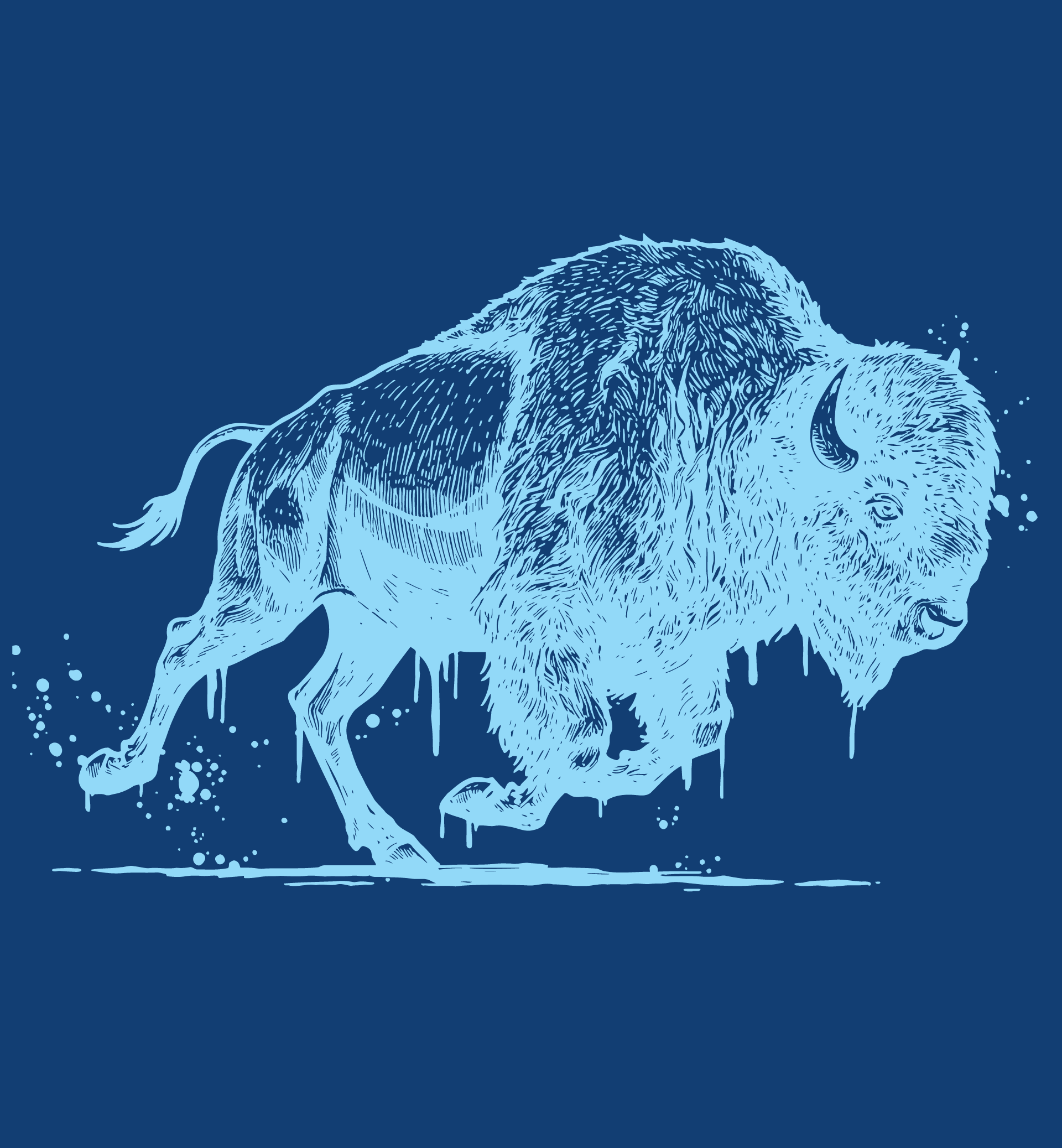
Buffalo When you can’t name a sharp, defensible difference, you don’t stand out; you dissolve into the herd. Brands that mirror competitors and recycle standard-issue promises signal a one-size-fits-all, nothing-to-see-here approach to doing business, not leadership. The buffalo metaphor is the warning label: differentiation breaks the herd dynamic; sameness accelerates it. Without a clear, structural difference, you’re not leading the market; you’re plodding while the world is shifting decisively around you.
Visual Metaphors After years of seeing the same predictable imagery and shortcuts used to represent business and brand ideas, we chose to break that pattern and lean into quirky but accurate visuals as metaphor. These offbeat pairings are embedded across our website, newsletter, and posts as a discipline to keep us from falling into the trap of slinging jargon and to protect you from nodding along to concepts you’ve heard a thousand times before.